
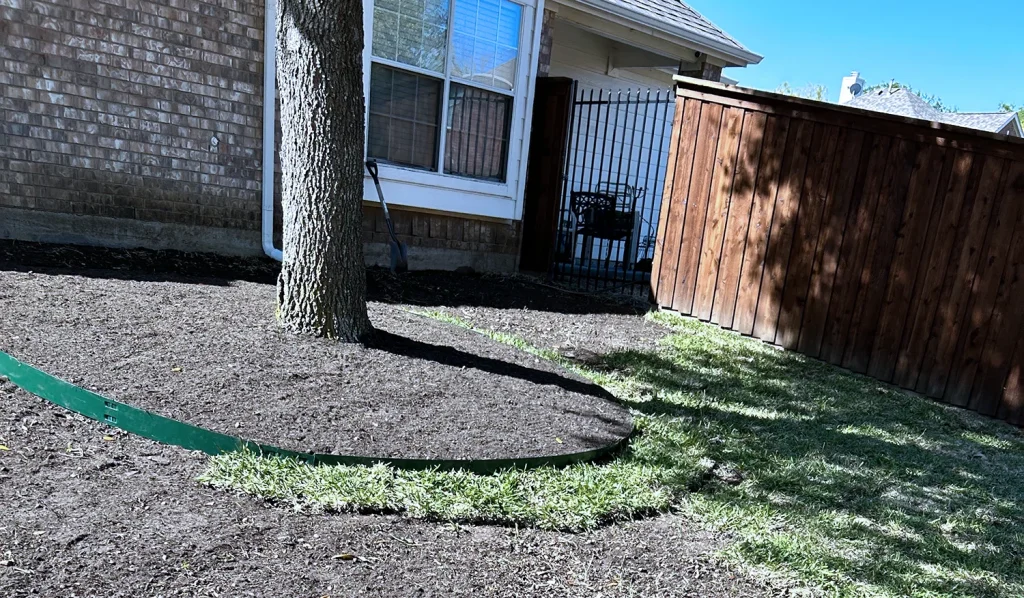
Known for holding up well in tough conditions, St. Augustine grass can stay strong for years to come. Compared to other popular warm-season grasses, St. Augustine grass can easily deal with extreme heat, humidity and even heavy foot traffic. However, in some cases in the areas that are exposed to shade, the turf can go soft and turn to mush. This often makes the lawn looks like wet and spongy. Here’s why this happens!
How Shade Can Change the Behaviour of St Augustine Grass
When grass receives more shade than it actually needs, photosynthesis slows down, and evaporation decreases along with it. This leads to the soil becoming cooler and wet for longer periods of time. Research also shows that shaded St Augustine lawns can retain 30 percent more surface moisture than the same St. Augustine grass planted in full sun. Now, you might assume that extra 30% moisture help the grass to grow and thrive but it does more harm than help. Extra moisture acts as a magnet for pest and fungi. Sometimes, it can adversely affect cell walls. Grass blades will get more fragile as a result. While these changes seem small, they can continuously stress the grass. You must also consider the play of morning dew. Prolonged exposure to dew keeps the blades wet which can lead to fungal pathogens attacking the plant bases.
How Drainage and Soil Can Trigger Mush
Soil and drainage play their role in turning St. Augustine grass to mush. The clay-heavy soils which are commonly found in Texas tend to drain out slowly. Moreover, poor drainage not only causes standing water but also keeps the soil excessively damp, which starts to rot the roots. Thus, you need to make sure that your soil is not overwatered and does not turn to mush.
Fungus Also Leads to Mush
There are many fungal diseases that are commonly found in the lawns of Texas. Usually, people spray fungicides to solve this problem, but without adjusting the air flow and the moisture levels, not much can be salvaged. Thus, you need to ensure that the grass is getting the adequate amount of moisture and airflow.
When shade and moisture overlap, things can turn ugly. Grass will start turning grey and the roots will start rotting. Lawns that receive less than 5 hours of sun tend to deal with these root rot incidents more frequently. Since the fungus attacks the roots first, you would not notice a thing first until it is too late. The grass will act normal until it is not. You will hardly find any resistance when pulling the grass.
Take Care of Mowing
When mowing your lawns, you need to take care of the fact that you do not cut your grass too short and low in the shaded areas otherwise your grass will slowly start to weaken and will turn into mush. Ensure that you are mowing the lawn at regular intervals at the correct height.
Check Your Watering Pattern
One common reason for grass turning into mush is overwatering. You must remember that while regular irrigation and watering are necessary, overwatering can quickly turn the grass to mush.
Air Flow and Canopy Density
You must ensure that there is proper airflow and that the grass is not blocked by trees canopies. If this happens, then your St. Augustine grass will not get the air flow that it needs, and will start turning to mush.
Final Thoughts
While maintaining the lawn can be difficult at times, if you take care of these small details, you will have a green, lush and beautiful lawn in no time!


